Key details for this exam, checked against the published exam outline
Each question shows the correct answer and an explanation of why it is right
A coach encourages a person to run two miles in ten minutes and provides the person a stopwatch to check periodically. The person completes the run in 9.8 minutes. Considering the goal-setting theory of motivation, which two factors explain why the person achieved the goal?
Edwin Locke's Goal-Setting Theory suggests that specific and difficult goals, with feedback, lead to higher performance. The theory identifies several key components that drive motivation. First is Specificity. In this case, the coach did not just say 'run fast'; they set a specific target of 'two miles in ten minutes'. Specific goals act as an internal stimulus, providing a clear sense of what needs to be done and how much effort is required.
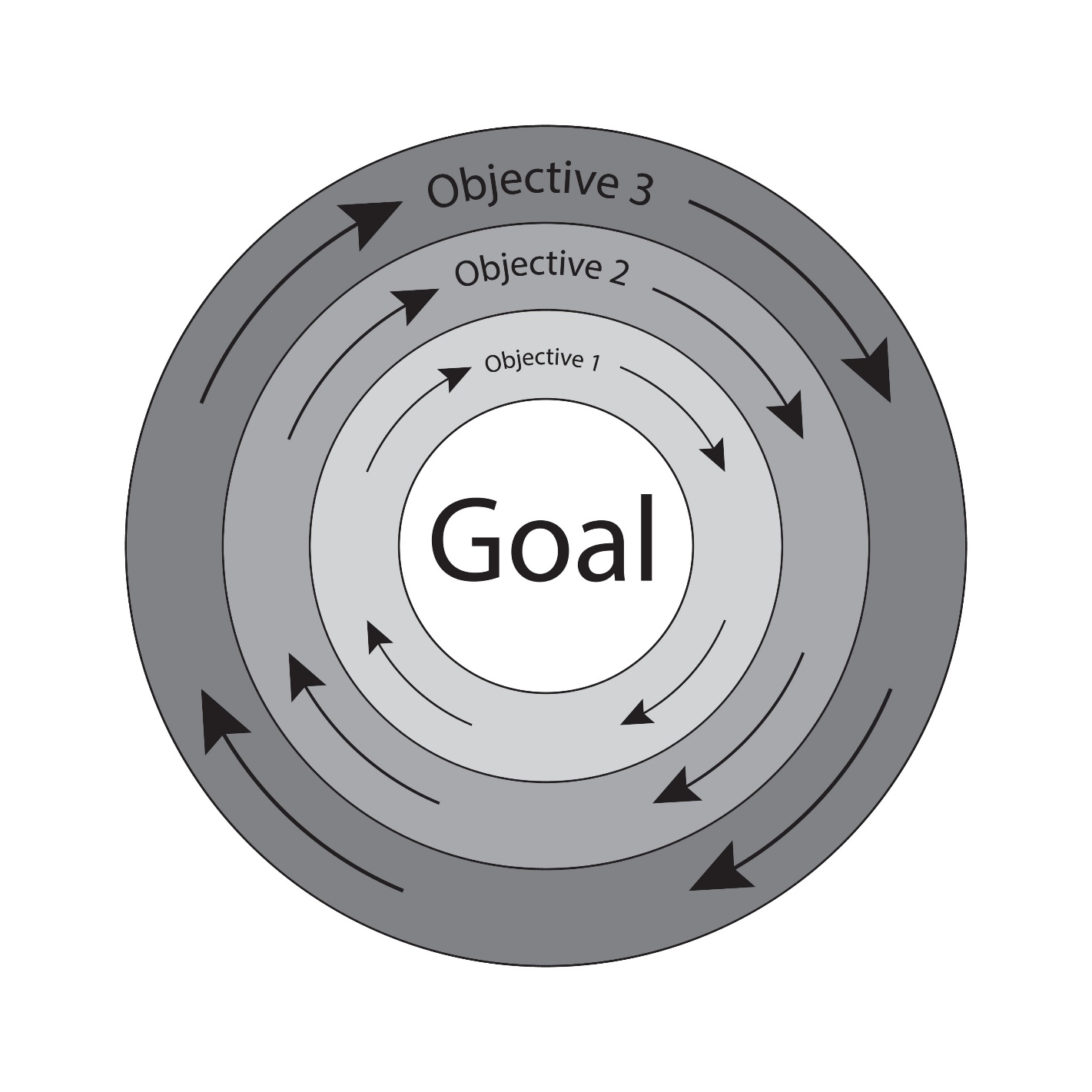
The second critical factor is Feedback. By providing a stopwatch, the coach allowed the runner to monitor their own progress. Feedback helps individuals identify discrepancies between what they have done and what they want to do; it guides behavior and motivates the individual to adjust their effort level to meet the goal. While 'challenge' is also a part of the theory (as difficult goals lead to higher performance), the presence of the stopwatch specifically addresses the feedback mechanism, and the clear time-distance parameters address specificity. Therefore, the combination of a clearly defined target (specificity) and the ability to track progress (feedback) are the primary drivers for the runner achieving the 9.8-minute result.
A is ambitious and cheerful at work. Which type of values are these?
Values represent basic convictions that a specific mode of conduct or end-state of existence is personally or socially preferable to an opposite mode. In Organizational Behavior, Milton Rokeach created the Rokeach Value Survey (RVS), which classifies values into two distinct sets: Terminal values and Instrumental values.
Terminal values refer to desirable end-states of existence. These are the goals a person would like to achieve during their lifetime, such as world peace, prosperity, or a sense of accomplishment. Instrumental values, on the other hand, refer to preferable modes of behavior or means of achieving the terminal values. Being 'ambitious' and 'cheerful' are behavioral traits or methods that an individual employs to reach their ultimate goals. For instance, being ambitious (an instrumental value) is the 'means' an employee uses to achieve the 'end' of financial success or career status (a terminal value). Similarly, being cheerful is a mode of conduct that might help an individual achieve the terminal goal of social recognition or happiness. Therefore, because these descriptions focus on the how of behavior rather than the what of ultimate life goals, they are strictly categorized as instrumental values. Understanding these values is crucial for managers because they influence motivation and how employees perceive organizational rewards and culture.
A team was assigned a project. Halfway through the project, however, it became obvious that the team was failing to meet expectations. Management had made sure that individuals assigned to the team had strong technical expertise as well as problem-solving and decision-making skills. However, other abilities for effective teamwork were overlooked. Which ability necessary for team members was overlooked?
To perform effectively, a team requires three different types of skills. First, it needs people with technical expertise to perform the task at hand. Second, it needs people with problem-solving and decision-making skills to be able to identify problems, generate alternatives, and make competent choices. Finally, and perhaps most importantly for group cohesion, a team needs people with strong interpersonal skills. Interpersonal skills include effective listening, feedback, and conflict resolution.
In the scenario provided, the team had the 'hard' skills (technical and analytical) but lacked the 'soft' skills required to navigate the social complexities of working as a unit. Without interpersonal skills, a team may have the smartest individuals but still fail because they cannot communicate effectively or resolve the inevitable friction that arises during a long-term project. While 'propensity for social loafing' is a behavior to avoid, and 'authoritarian personality' is often a hindrance, the foundational 'ability' cited in organizational behavior literature as a prerequisite for team success alongside technical and problem-solving skills is interpersonal competence.
In organizing a team to develop a new product for entry into the electronics market, management wanted to assign team members having characteristics common to effective teams. Which list specifies common characteristics of effective teams?
The effectiveness of a team is generally categorized by its composition, context, and process. According to the Big Five Personality Model and team research, effective teams are typically composed of individuals who score high on emotional stability, agreeableness, and conscientiousness. These traits help maintain a positive working environment and reduce interpersonal friction. Furthermore, teams must ensure that they have people to fill various role demands---meaning that all necessary tasks and social-maintenance functions are being performed by someone within the group.
Crucially, effective teams do not necessarily have an 'absence of conflict' (which refutes option C). Instead, they maintain a manageable level of conflict. Specifically, 'task conflict'---disagreements over the content of the work---can actually stimulate discussion and lead to better decisions, provided that 'relationship conflict' (interpersonal animosity) remains low. Therefore, a team that is emotionally stable, fulfills its role requirements, and handles conflict constructively is much more likely to succeed in a high-pressure environment like the electronics market than one that simply tries to avoid all disagreement.
What are two of the three forces that play a particularly important role in sustaining an organization's culture?
Once a culture is in place, certain practices within the organization act to maintain it by exposing employees to a set of similar experiences. Three forces play a particularly important role in sustaining a culture: selection practices, the actions of top management, and the socialization process.
The actions of top management are crucial because through what they say and how they behave, senior executives establish norms that filter down through the organization. For example, their reactions to crises or how they reward performance send clear signals about what is truly valued. The socialization process is the method by which the organization helps new employees adapt to its culture. Even if an organization hires the 'right' people during selection, they must still be taught the specific values and customs of the firm. Socialization ensures that the culture is transmitted consistently from one generation of employees to the next, maintaining the organization's unique identity over time.
40 questions covering all exam domains, starting from $20
7 domains from the WGU Organizational-Behavior exam outline, with approximate weightings. Every sample question above is tagged with the domain it comes from
Understand the definition, scope, and importance of organizational behavior in modern workplaces. Recognize key theories that explain human behavior in organizational settings and explore how organizational behavior principles can improve team performance and employee satisfaction.
Analyze personality, values, attitudes, and how they influence work behavior. Examine motivational theories such as Maslow's hierarchy of needs and Herzberg's two-factor theory, and apply AI-driven tools to assess employee engagement and predict motivation patterns.
Study how groups form, develop, and function within organizations. Evaluate the impact of leadership, communication, and conflict on team performance and use AI-powered collaboration platforms to enhance teamwork and manage group dynamics.
Compare different leadership approaches including transformational, transactional, and servant leadership. Understand the relationship between leadership style and organizational culture, and leverage AI analytics to support leadership decision-making.
Sample question from this domain above: Q4
Identify the components and types of organizational culture. Examine strategies for managing change and overcoming resistance, and implement AI-driven change management solutions for better adaptation and employee buy-in.
Explore formal and informal communication channels in organizations. Understand barriers to effective communication and strategies to overcome them, and integrate AI communication tools to streamline information flow.
Study individual and group decision-making processes in organizational contexts. Analyze common biases and errors in organizational decisions and apply AI tools for data-driven decision-making and predictive problem-solving.
Common questions about the exam itself

