At ValidExamDumps, we consistently monitor updates to the SAP C_THR94_2211 exam questions by SAP. Whenever our team identifies changes in the exam questions,exam objectives, exam focus areas or in exam requirements, We immediately update our exam questions for both PDF and online practice exams. This commitment ensures our customers always have access to the most current and accurate questions. By preparing with these actual questions, our customers can successfully pass the SAP Certified Application Associate - SAP SuccessFactors Time Management 2H/2022 exam on their first attempt without needing additional materials or study guides.
Other certification materials providers often include outdated or removed questions by SAP in their SAP C_THR94_2211 exam. These outdated questions lead to customers failing their SAP Certified Application Associate - SAP SuccessFactors Time Management 2H/2022 exam. In contrast, we ensure our questions bank includes only precise and up-to-date questions, guaranteeing their presence in your actual exam. Our main priority is your success in the SAP C_THR94_2211 exam, not profiting from selling obsolete exam questions in PDF or Online Practice Test.
The customer has a collective/union agreement that automatically provides employees with a 15 minute break for every 3 hours they work during a non-working day or public holiday.What break configuration is required in this case?
You are using Clock In Clock Out Group in Job Info.What is the correct combination that you are allowed to use?
What operations are supported when an employee accesses a Time Event via the Time Sheet UI?
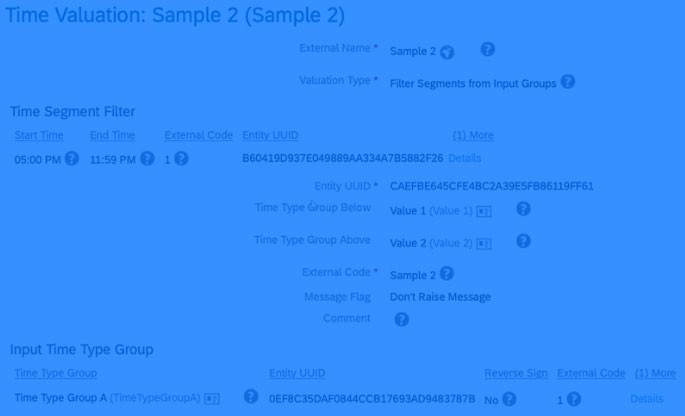
Based on an employee's work schedule, the planned working time is from 09:00 AM to 05:00 PM (9 hours). On the timesheet, the employee enters the actual start and end time as 09:00 AM and 06:00 PM. What will be the hours in Value 1 and Value 2 of the below rule?Note:Time Type Group A in the Input Time Type Group is the input hours from 09:00 AM to 06:00 PM.No previous and next rules are considered in this scenario.No other additional scenarios that may alter the working time are considered in this rule (for example a break or a holiday).