At ValidExamDumps, we consistently monitor updates to the Pegasystems PEGAPCSSA87V1 exam questions by Pegasystems. Whenever our team identifies changes in the exam questions, objectives, focus areas or requirements, We immediately update our exam questions for both PDF and online practice exams. This commitment ensures our customers always have access to the most current and accurate questions. By preparing with these up to date and 100% exam domain coverage questions, our customers can successfully pass the Pegasystems Pega Certified Senior System Architect (PCSSA) 87V1 exam on their first attempt without needing additional materials or study guides.
Other certification materials providers often include outdated or removed questions by Pegasystems in their PEGAPCSSA87V1 exam. These outdated questions lead to customers failing their Pegasystems Pega Certified Senior System Architect (PCSSA) 87V1 exam. In contrast, we ensure our questions bank includes only precise and up-to-date questions. Our main priority is your success in the Pegasystems PEGAPCSSA87V1 exam, not profiting from selling obsolete exam questions in PDF or Online Practice Test.
A hospital uses a Patient visit case type to track patient visits to the Emergency Room (ER). The case type can create Lab analysis and Diagnostic imaging child cases. While the child cases are active, the attending doctor or nurse must be able to update the patient visit case with notes and treatment recommendations.
In the Answer Area, select the configurations which allow a doctor or nurse to update the parent case while lab and imaging technologists perform assignments on their respective child cases.
You have a requirement to associate users in different units to the same work queue.
How do you implement this requirement?
The ruleset list for an application consists of the following rulesets, ordered from highest to lowest:
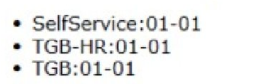
A rule with an Apply to: class of TGB-HR-SelfService-Work-TimeOff references a rule named ConfirmationRequest. The four instances of ConfirmationRequest in the rules cache are shown in the following table.
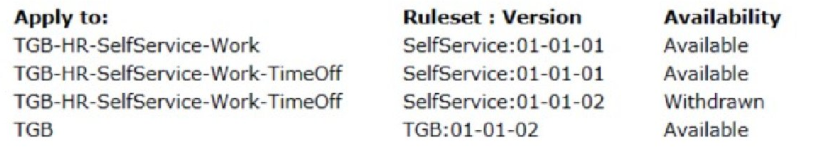
Which is chosen during rule resolution?
A hospital uses a case type to manage the treatment of patients visiting the Emergency Room (ER). Cases are created when the patient checks in at the registration desk, and are resolved when the patient is released from the hospital. Stakeholders identify the following security requirements for the case type.
Patients access cases on a read-only basis.
Patients can only access their own cases.
Doctors and nurses can modify cases throughout the case life cycle.
Only doctors are allowed to write prescriptions.
Which configuration allows doctors and nurses to modify cases while complying with all identified security requirements?
Application Settings allow you to____________.

