At ValidExamDumps, we consistently monitor updates to the Oracle 1Z0-134 exam questions by Oracle. Whenever our team identifies changes in the exam questions, objectives, focus areas or requirements, We immediately update our exam questions for both PDF and online practice exams. This commitment ensures our customers always have access to the most current and accurate questions. By preparing with these up to date and 100% exam domain coverage questions, our customers can successfully pass the Oracle WebLogic Server 12c: Advanced Administrator II exam on their first attempt without needing additional materials or study guides.
Other certification materials providers often include outdated or removed questions by Oracle in their 1Z0-134 exam. These outdated questions lead to customers failing their Oracle WebLogic Server 12c: Advanced Administrator II exam. In contrast, we ensure our questions bank includes only precise and up-to-date questions. Our main priority is your success in the Oracle 1Z0-134 exam, not profiting from selling obsolete exam questions in PDF or Online Practice Test.
You created a script to monitor your WebLogic Server WLS Execute Thread:
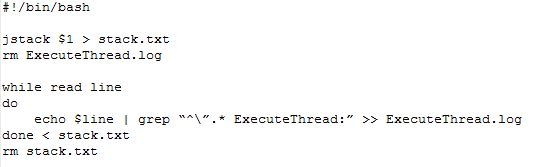
Here is a message in your ExecuteThread.log file:

What is the value of xxxx if the thread has been running a request for twenty minutes, assuming a default configuration?
This thread is considered Stuck by WebLogic because it's been running for over the time defined in MaxStuckThreadTime (600 seconds by default). Weblogic Server waits for this time to be reached before marking a thread as stuck if the thread is still working after this time.
Example: [STUCK] ExecuteThread: '2' for queue: 'weblogic.kernel.Default (self-tuning)' id=73 idx=0x128 nid=13410 prio=1 alive, in native, daemon
You are creating a new domain with WLST.
Identify three parameters that can be customized with the setOption command. (Choose three.)
setOption sets options related to a domain creation or update.
Syntax: setOption(optionName, optionValue)
Option names include:
* JavaHome---Home directory for the JVM to be used when starting the server. The default for this option depends on the platform on which you install WebLogic Server. Update JavaHome to point to the jre directory for the JDK that you are using for WebLogic Server.
* DomainName---Name of the domain.
* ServerStartMode---Mode to use when starting the server for the newly created domain. This value can be dev (development) or prod (production). This option defaults to dev.
You have an application already deployed in a production environment that needs a modification to one of its tuning parameters. Currently, that tuning parameter has a default value since there was neither a deployment descriptor used nor a deployment plan included with the application deployment. You now attempt to use the Administration Console web application to make a dynamic modification to that parameter.
Which statement is true? (Choose the best answer.)
Defining tuning parameters is not required in order to successfully deploy an application. If an application's deployment descriptors and deployment plan do not define tuning parameters, WebLogic Server uses default values. The Administration Console automatically uses a deployment plan named plan.xml in the \plan subdirectory of an application root directory if one is available.
You are asked to create a WLST script to make live updates to a domain that has its administration server running. You want your script to mimic the actions of a WebLogic administrator by using the administration console and clicking the ''Lock and Edit'' button.
What commands would accomplish this?
Not edit() navigates to the last MBean to which you navigated in the edit configuration MBean hierarchy or to the root of the hierarchy, DomainMBean.
StartEdit() starts a configuration edit session on behalf of the currently connected user. You must navigate to the edit configuration MBean hierarchy using the edit command before issuing this command.
Note: Click the Lock & Edit button to lock the configuration edit hierarchy for the domain. This enables you to make changes using the Administration Console.
Which three types of information can an Extension Template contain? (Choose three.)
Optionally, you can define parameters for Java Message Service (JMS) in the Extension Template.
Optionally, you can customize the Java Database Connectivity (JDBC) settings in the Extension Template.
You can review and modify, if desired, the list of applications to be included in your extension template.

