At ValidExamDumps, we consistently monitor updates to the ISTQB ATA exam questions by ISTQB. Whenever our team identifies changes in the exam questions, objectives, focus areas or requirements, We immediately update our exam questions for both PDF and online practice exams. This commitment ensures our customers always have access to the most current and accurate questions. By preparing with these up to date and 100% exam domain coverage questions, our customers can successfully pass the ISTQB Advanced Test Analyst exam on their first attempt without needing additional materials or study guides.
Other certification materials providers often include outdated or removed questions by ISTQB in their ATA exam. These outdated questions lead to customers failing their ISTQB Advanced Test Analyst exam. In contrast, we ensure our questions bank includes only precise and up-to-date questions. Our main priority is your success in the ISTQB ATA exam, not profiting from selling obsolete exam questions in PDF or Online Practice Test.
You are starting to review some of the incident reports that have been submitted as a result of test execution.
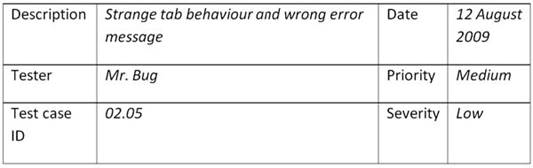
Which THREE of the comments would be your main findings when you have reviewed the following incident report?
[K4] 3 credits, 2 out of 3 correct 1 credit
Apart from state transition testing, which other specification-based technique would you additionally choose to test the interfaces between components of ''Route Calculation'' and thus typically find different types of defects?
Identify the MOST likely technique from the following list.
[K4] 3 credits
Based on the classification tree show below, how many test cases are required using the classification tree method?
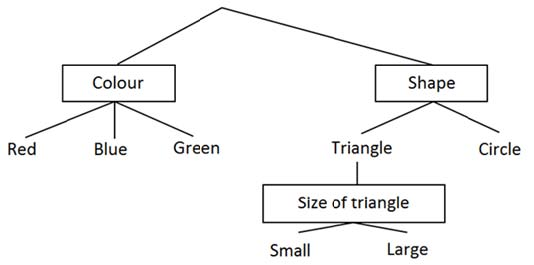
[K3] 2 credits
Consider the following description in a defect report ''Nasty bug trashed contents of new file that I created by formatting some text in symbol font, wasting my time.''
Which TWO of the following comments would you immediately make based on the defect description above?
[K4] 3 credits, 1 out of 2 correct 1 credit
While identifying scenario's for the use case ''copy A4 -- A4'' for a new copier, the following scenario's were identified:
Basic scenario: single side to single side
Deviations: single side to double side, copy of a set, copy using the automatic document feeder Failures: no paper in paper tray, paper jam, out of staples
During interviews with both development and end-users it has been established that the failure scenario's can occur during the basic scenario and during each of the deviations.
How many test cases will be needed to achieve full coverage both for valid and invalid situations?
[K3] 2 credits

