Free Fortinet FCP_FSM_AN-7.2 Exam Actual Questions & Explanations

Last updated on: Jun 10, 2026
Author: Mia Choi (Fortinet Security Operations Specialist)

The FCP - FortiSIEM 7.2 Analyst exam (FCP_FSM_AN-7.2) validates your ability to deploy, configure, and manage FortiSIEM in security operations environments. This certification is part of the Fortinet Certified Professional Security Operations path and demonstrates competency in security event monitoring and incident response. This page outlines the exam structure, core topics, and effective study strategies to help you prepare confidently. Whether you're advancing your Fortinet credentials or deepening your security operations expertise, understanding the exam scope is your first step toward success.

FCP_FSM_AN-7.2 Exam Syllabus & Core Topics

Use this topic map to guide your study for Fortinet FCP_FSM_AN-7.2 (FCP - FortiSIEM 7.2 Analyst) within the Fortinet Certified Professional Security Operations path.

  • Analytics: Understand how FortiSIEM processes and correlates security events. You must be able to interpret analytics dashboards, identify trends in security data, and use analytics to inform threat detection strategies.
  • Rules and Subpatterns: Master the creation and tuning of detection rules and subpatterns. Candidates should be able to design custom rules that match organizational threats, adjust sensitivity thresholds, and validate rule effectiveness in production environments.
  • Incidents, Notifications, and Remediation: Learn to manage the full incident lifecycle. You must configure notifications, escalate incidents appropriately, document remediation steps, and track resolution status within FortiSIEM workflows.
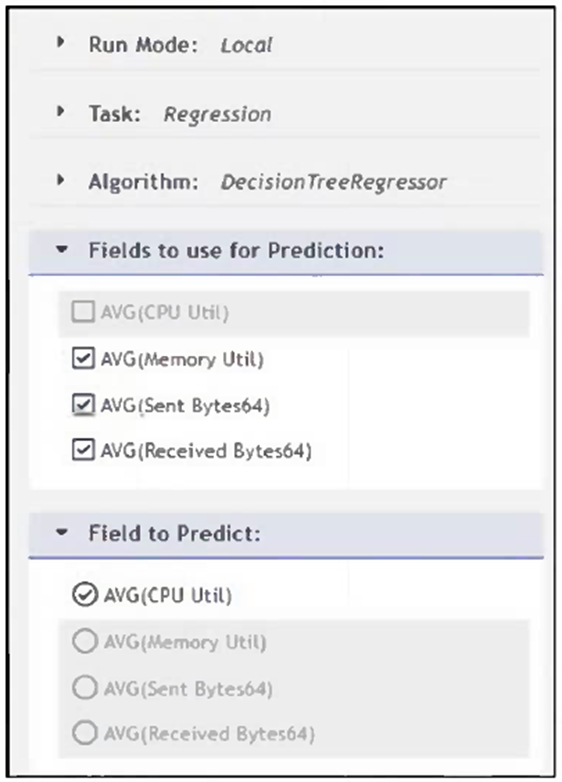
  • Machine Learning, UEBA, and ZTNA: Explore advanced detection capabilities including User and Entity Behavior Analytics (UEBA) and Zero Trust Network Access (ZTNA) integration. Candidates should understand how machine learning models enhance threat detection and how to apply zero-trust principles in FortiSIEM deployments.

Question Formats & What They Test

The FCP_FSM_AN-7.2 exam uses a blend of question types to assess both conceptual knowledge and practical decision-making in real-world security operations scenarios.

  • Multiple Choice: Test foundational knowledge of FortiSIEM features, event correlation logic, rule syntax, and security operations best practices. These items verify your understanding of core terminology and system behavior.
  • Scenario-Based Items: Present realistic security incidents or operational challenges. You must analyze event data, choose appropriate detection rules, prioritize incidents, or recommend remediation actions based on organizational context.
  • Configuration Scenarios: Require you to determine the correct settings or workflow steps to achieve a specific outcome, such as tuning alert thresholds, integrating external data sources, or establishing escalation procedures.

Questions progress in difficulty and emphasize practical application, ensuring candidates can handle complex, multi-faceted security operations tasks.

Preparation Guidance

Effective preparation combines structured study of each topic area with hands-on practice and regular self-assessment. Allocate study time proportionally to exam weight, and reinforce connections between analytics, detection rules, incident management, and advanced threat detection techniques.

  • Map Analytics, Rules and Subpatterns, Incidents/Notifications/Remediation, and Machine Learning/UEBA/ZTNA to weekly study goals. Track progress and adjust pacing based on your confidence in each domain.
  • Work through practice question sets and carefully review explanations for both correct and incorrect answers. This builds pattern recognition and clarifies common misconceptions.
  • Link features across the full workflow: understand how analytics inform rule creation, how rules trigger incidents, and how UEBA and machine learning enhance detection accuracy.
  • Complete a timed practice test under exam conditions to build pacing, reduce test anxiety, and identify remaining weak areas for focused review.

Explore other Fortinet certifications: view all Fortinet exams.

Get the PDF & Practice Test

Strengthen your preparation with up-to-date resources from validexamdumps.com. These materials align to FCP_FSM_AN-7.2 and cover practical scenarios with clear explanations.

  • Q&A PDF with explanations: Topic-mapped questions that clarify why correct options are right and others aren't.
  • Practice Test: Realistic items, timed and untimed modes, progress tracking, and detailed review of each question.
  • Focused coverage: Aligned to Analytics, Rules and Subpatterns, Incidents/Notifications/Remediation, and Machine Learning/UEBA/ZTNA so you study what matters most.
  • Regular reviews: Content refreshes that reflect syllabus and product changes.

Visit the exam page to download the PDF, Online Practice Test, or get a bundle discount for both formats: FCP - FortiSIEM 7.2 Analyst.

Frequently Asked Questions

Which topics carry the most weight on the FCP_FSM_AN-7.2 exam?

Rules and Subpatterns and Incidents/Notifications/Remediation typically account for a significant portion of the exam, as these directly impact daily security operations. However, all four domains are tested, so balanced preparation across Analytics, Rules, Incident Management, and Machine Learning/UEBA/ZTNA is essential for success.

How do the four topic areas connect in real FortiSIEM deployments?

Analytics provide visibility into security events; Rules and Subpatterns turn that visibility into detections; Incidents/Notifications/Remediation manage the response workflow; and Machine Learning/UEBA/ZTNA enhance detection accuracy and reduce false positives. Understanding these connections helps you see FortiSIEM as an integrated system rather than isolated features.

What hands-on experience should I prioritize before taking the exam?

Gain practical experience with event correlation, rule tuning, and incident escalation in a FortiSIEM lab environment. Focus on creating custom rules, adjusting thresholds, and walking through the full incident lifecycle from detection to remediation. Familiarity with the FortiSIEM user interface and workflow navigation is invaluable.

What are common mistakes that cost candidates points?

Candidates often confuse rule sensitivity levels or misunderstand how subpatterns combine to trigger incidents. Another frequent error is overlooking the importance of notification configuration and escalation procedures in incident management. Carefully review scenario details and consider the full operational context before selecting your answer.

How should I structure my final week of study before the exam?

Dedicate the first few days to reviewing weak topic areas identified in practice tests. Spend the middle days completing full-length timed practice tests to build stamina and pacing. In your final days, do light review of key terminology and common scenario patterns, then rest well before exam day to maintain focus and confidence.

Question No. 1

Refer to the exhibit.

If you group the events by User, Source IP, and Count attributes, how many results will FortiSIEM display?

Show Answer Hide Answer
Correct Answer: B

Grouping by User, Source IP, and Count means that each unique combination of those three attributes will be treated as a separate result. In the table, all six rows have distinct combinations of User, Source IP, and Count - so FortiSIEM will display 6 results.


Question No. 2

Refer to the exhibit.

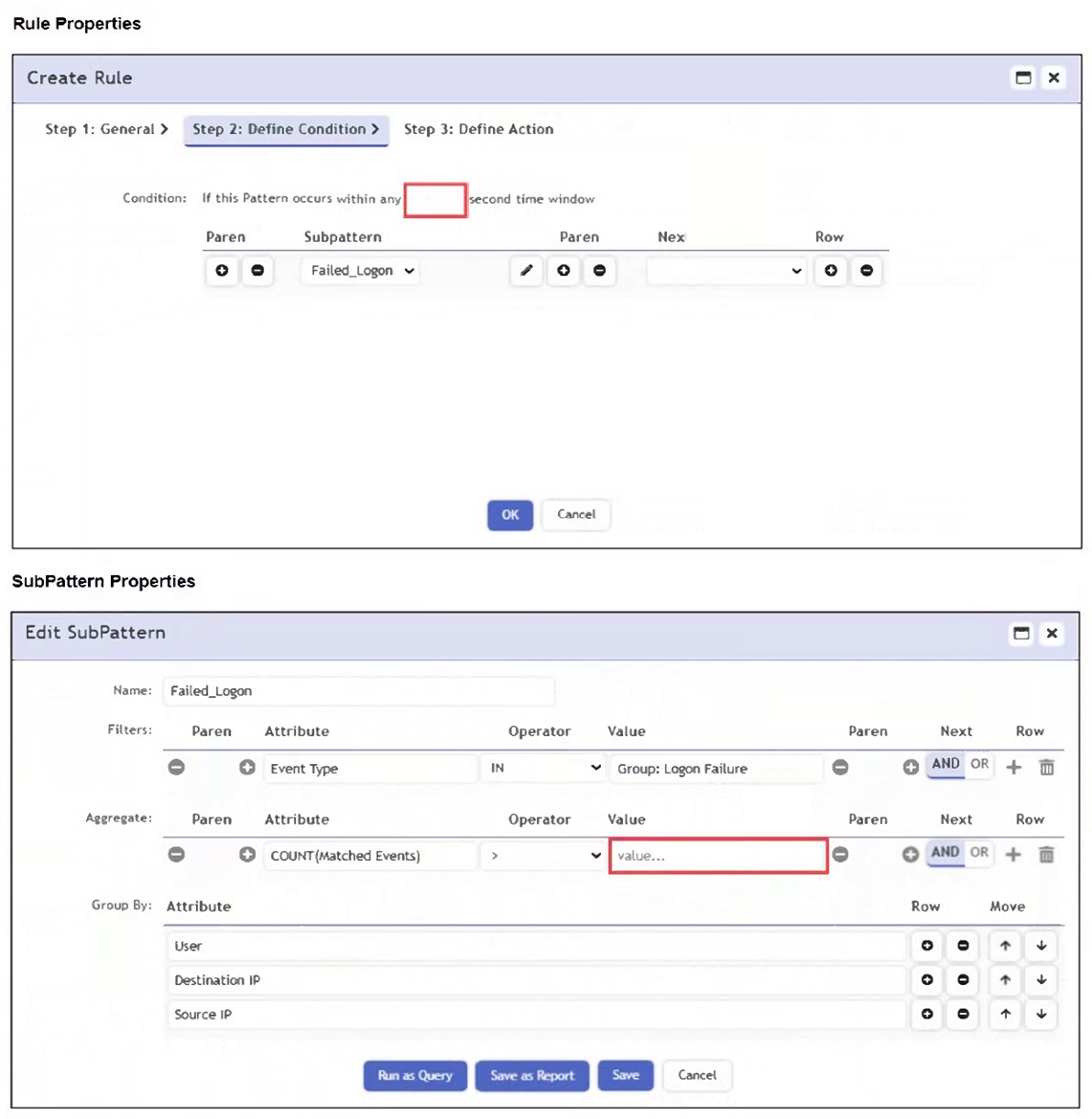
Which two conditions will match this rule and subpatterns? (Choose two.)

Show Answer Hide Answer
Correct Answer: A, B

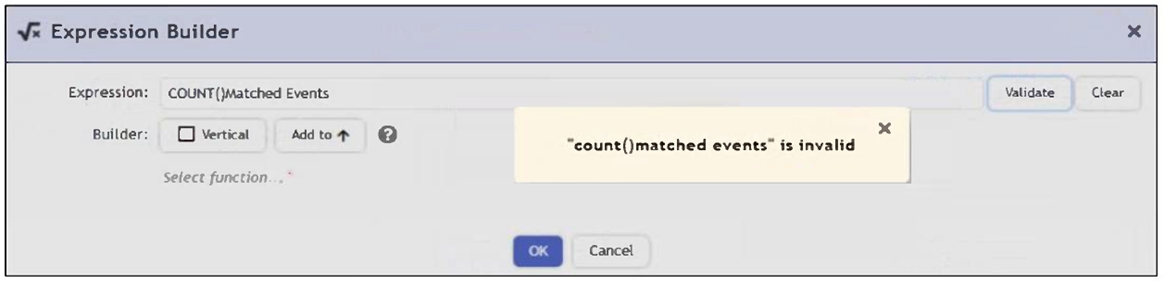
The user initiates an RDP session (Subpattern 1) and then fails to log in multiple times (Subpattern 2 with COUNT(Matched Events) >= 3) - both from the same Source IP and User within 300 seconds.

The brute force attempts typically involve a successful RDP connection followed by multiple failed logins, satisfying the sequence and grouping conditions in the rule.


Question No. 3

Which information can FortiSIEM retrieve from FortiClient EMS through an API connection?

Show Answer Hide Answer
Correct Answer: D

FortiSIEM can retrieve ZTNA tags from FortiClient EMS through an API connection, enabling dynamic user and device classification for policy enforcement and incident response.


Question No. 4

Which items are used to define a subpattern?

Show Answer Hide Answer
Correct Answer: A

A subpattern in FortiSIEM is defined using Filters to match specific events, Aggregate conditions to apply statistical thresholds (e.g., COUNT), and Group By attributes to segment data for evaluation. These three components collectively determine how the subpattern functions.


Question No. 5

Refer to the exhibit.

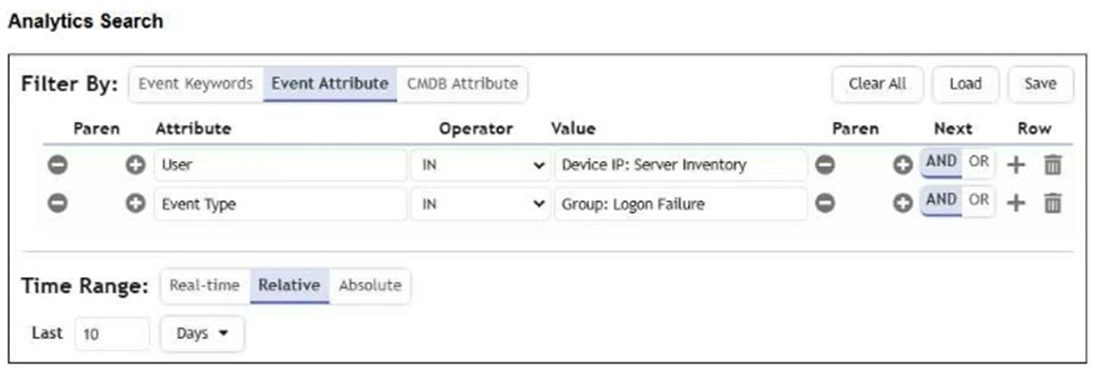
A FortiSIEM device is receiving syslog events from a FortiGate firewall. The FortiSIEM analyst is trying to search the raw event logs for the last two hours that contain the keyword "udp". However, they are getting no results from the search, which they know should be available. Based on the filter shown in the exhibit, why are there no search results?

Show Answer Hide Answer
Correct Answer: D

The operator is set to '=', which performs an exact match on the entire raw event log, not a substring search. To find logs that contain the keyword 'udp', the analyst should use the CONTAIN operator instead. This will return all logs where 'udp' appears anywhere in the raw log message.