Key details for this exam, checked against the published exam outline
Each question shows the correct answer and an explanation of why it is right
What is the next step after designing an investment policy statement?
A client recently sold her holdings in JKL Equity Fund. The client's transactions in the fund are
Summarized below:
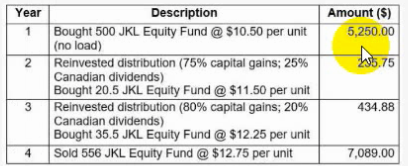
What is the client's capital gain from the sale of the fund in Year 47?
What bond should an advisor recommend to someone who wants to hold bonds and maximize potential cap-tai gams when interest rates are expected to fall?
A long-term bond with a low coupon will maximize capital gains when interest rates fall. Here's why:
Long-term bonds are more sensitive to interest rate changes due to their longer duration, which amplifies the price movement.
Low coupon bonds are more affected by changes in interest rates compared to high coupon bonds because more of their value comes from the principal repayment rather than periodic interest payments.
Other options:
Short-term bonds: Have lower duration and less sensitivity to interest rate changes, so they do not maximize capital gains.
High coupon bonds: Are less sensitive to interest rate changes because of their higher periodic cash flows.
Volume 1, Chapter 7: Fixed-Income Securities: Pricing and Trading, section on 'Impact of Maturity and Coupon on Bond Prices' explains the relationship between interest rate changes, bond duration, and price sensitivity.
What legal authority does the done receive under the protection mandate in Quebec?
In Quebec, the concept of a protection mandate (also known as a 'mandate in case of incapacity') allows a person (the donor) to appoint someone (the mandatary or donee) to act on their behalf if they become unable to do so. The legal authority granted under this mandate encompasses decision-making and taking actions on behalf of the donor when they are incapacitated, ensuring their personal, medical, and financial interests are protected.
Key Aspects of the Protection Mandate:
Purpose: The primary purpose of the protection mandate is to prepare for a scenario where the donor loses their mental or physical capacity to manage their own affairs. It is a proactive measure for managing one's personal care and assets.
Scope of Authority:
The mandatary gains authority to make personal and financial decisions once the incapacity of the donor is confirmed, usually by a medical and legal process.
The decisions may include managing bank accounts, paying bills, handling investments, and making healthcare decisions on behalf of the donor.
Validation Requirement: The mandate only comes into effect after a formal validation process involving legal authorities to confirm the donor's incapacity.
Legal Framework: The Quebec Civil Code governs the creation and execution of a protection mandate, ensuring the mandatary acts in the best interest of the incapacitated individual.
Why Option B Is Correct:
The protection mandate specifically applies in cases where the donor is incapacitated. It grants the donee authority to manage aspects of the donor's life that they can no longer handle themselves.
Options A, C, and D refer to different legal instruments or scenarios, such as probating a will (A), acting while the donor is capable (C), or estate administration after death (D), none of which are relevant under a protection mandate in Quebec.
Reference from CSC Study Materials:
Volume 2, Chapter 26: 'Working with the Retail Client,' Section on Estate Planning, Powers of Attorney, and Living Wills.
What is a limitation of labour-sponsored venture capital corporations (LSVCCs)?
What event would trigger an amendment of the account application while monitoring a portfolio?
Exam domains verified against: Official CSI CSC2 exam guide, last checked September 2026.
Understand the Canadian securities industry including investment dealers and financial intermediaries. The capital market section covers investment capital, financial instruments, primary and secondary markets, and electronic trading systems. Learn the regulatory environment including regulators, self-regulatory organizations, regulation principles, remediation options, and ethical standards.
Learn how microeconomic and macroeconomic environments affect financial markets. Study economic growth measurement, business cycle phases, labour market conditions, interest rates, inflation impacts, and international finance. Understand fiscal and monetary policy, the role of the Bank of Canada, and how government policy decisions shape the investment landscape.
Sample question from this domain above: Q4
Master fixed-income securities including bonds, debentures, and government securities. Learn to calculate bond price and yield, understand the term structure of interest rates, and study bond pricing properties. Study equity securities including common and preferred shares, stock indexes, derivatives, options, forwards, futures, rights and warrants.
Sample question from this domain above: Q3
Study business structures with focus on corporations and their financial statements. Learn financial statement analysis, annual report requirements, public company disclosure rules, and investor rights. Understand the corporate financing process, prospectus requirements, securities distribution methods, and the listing process.
Learn fundamental analysis methods including macroeconomic analysis, industry analysis, and technical analysis. Study company analysis using financial statements and financial ratios to evaluate investment prospects. Develop skills to assess profitability and measure investment quality.
Master Canadian taxation basics including tax features of pension income, tax-deferral plans, and tax-free savings plans. Learn about fee-based accounts and the financial planning approach for retail and institutional clients. Study the life cycle hypothesis, estate planning, and ethical standards of conduct.
Understand mutual fund structures, regulation, pricing, and the Know Your Client rule. Study different mutual fund types, management styles, redemption options, and performance measurement. Learn about exchange-traded funds, alternative investments, hedge funds, segregated funds, closed-end funds, and structured products.
Learn techniques to analyze and measure risk and return in portfolios. Study formulas for calculating expected return and strategies for maximizing return while reducing risk. Apply the seven-step portfolio management process from setting investment objectives through rebalancing the portfolio.
Sample question from this domain above: Q1
Common questions about the exam itself

