At ValidExamDumps, we consistently monitor updates to the CIW 1D0-610 exam questions by CIW. Whenever our team identifies changes in the exam questions, objectives, focus areas or requirements, We immediately update our exam questions for both PDF and online practice exams. This commitment ensures our customers always have access to the most current and accurate questions. By preparing with these up to date and 100% exam domain coverage questions, our customers can successfully pass the CIW Web Foundations Associate exam on their first attempt without needing additional materials or study guides.
Other certification materials providers often include outdated or removed questions by CIW in their 1D0-610 exam. These outdated questions lead to customers failing their CIW Web Foundations Associate exam. In contrast, we ensure our questions bank includes only precise and up-to-date questions. Our main priority is your success in the CIW 1D0-610 exam, not profiting from selling obsolete exam questions in PDF or Online Practice Test.
Consider the following HTML5 code:
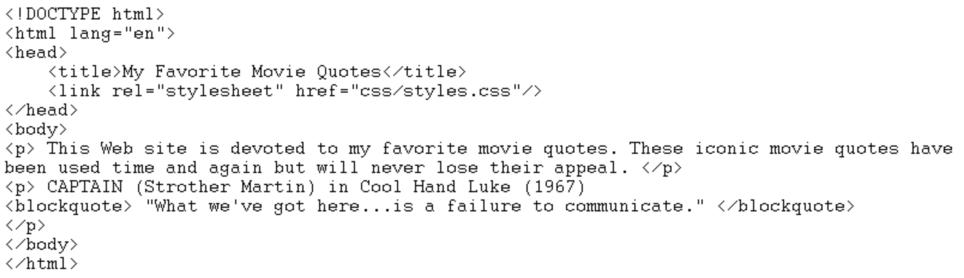
The code does not validate as HTML5. Why?
Andrea works as an Administrative Assistant for a small business that uses an SaaS service for accounting, sales orders and customer service information about the business's customers. This product is similar to Salesforce.com and its competitors. Andrea makes sure she saves accurate records about current projects and performs regular backups of the business data stored on the cloud-based service. Which of the following is the primary reason for this practice?
Ron has an older computer to which he frequently downloads and saves company files. He recently noticed that he was running low on disk space and decided to delete many old files that he no longer needed. He now notices that it takes a long time to open or save documents to his hard drive. Which maintenance task can help?
Which type of intellectual property includes business plans, proprietary code and sales contracts?
Which of the following is used to help non-technical users collectively classify and find information on a site?

