At ValidExamDumps, we consistently monitor updates to the Cisco 500-220 exam questions by Cisco. Whenever our team identifies changes in the exam questions, objectives, focus areas or requirements, We immediately update our exam questions for both PDF and online practice exams. This commitment ensures our customers always have access to the most current and accurate questions. By preparing with these up to date and 100% exam domain coverage questions, our customers can successfully pass the Cisco Engineering Cisco Meraki Solutions exam on their first attempt without needing additional materials or study guides.
Other certification materials providers often include outdated or removed questions by Cisco in their 500-220 exam. These outdated questions lead to customers failing their Cisco Engineering Cisco Meraki Solutions exam. In contrast, we ensure our questions bank includes only precise and up-to-date questions. Our main priority is your success in the Cisco 500-220 exam, not profiting from selling obsolete exam questions in PDF or Online Practice Test.
Refer to the exhibit.
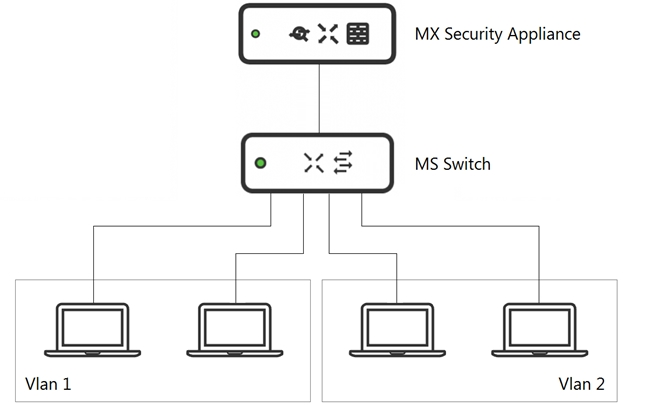
What is an advantage of implementing inter-VLAN routing on an MX Security Appliance rather than performing inter-VLAN routing on an MS Series Switch?
Refer to the exhibit.
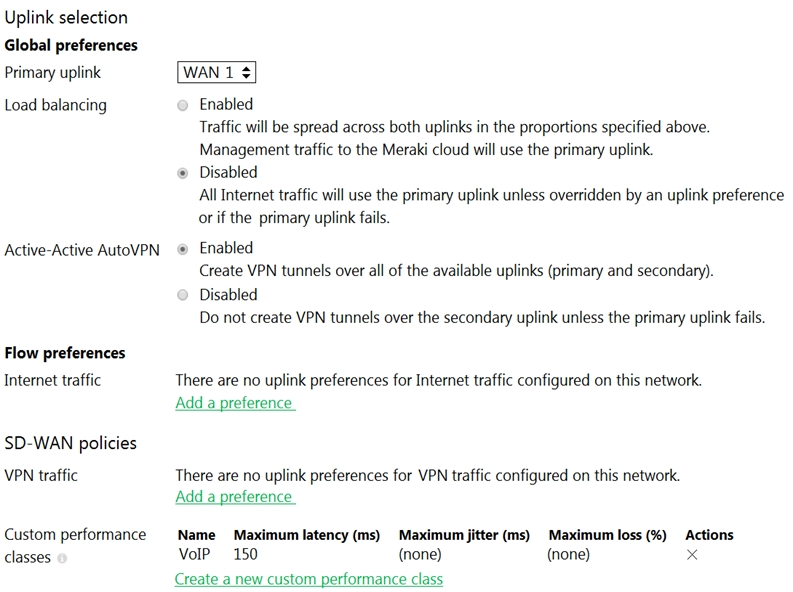
What does the MX Security Appliance send to determine whether VPN traffic exceeds the configured latency threshold in the VoIP custom performance class?
The performance probe is a small payload (approximately 100 bytes) of UDP data sent over all established VPN tunnels every 1 second. MX appliances track the rate of successful responses and the time that elapses before receiving a response. This data allows the MX to determine the packet loss, latency, and jitter over each VPN tunnel in order to make the necessary performance-based decisions.
Which two primary metrics does Meraki Insight use to calculate the Application Performance Score? (Choose two.)
In an organization that uses the Co-Termination licensing model, which two operations enable licenses to be applied? (Choose two.)
Renewing the Dashboard license: This option allows you to extend the co-termination date of your organization by purchasing new licenses for the same or longer term as your existing licenses. You can renew your Dashboard license from the Organization > Configure > License Info page or from the Meraki Dashboard homepage.
Licensing more devices: This option allows you to add new devices to your organization by purchasing new licenses for them. You can license more devices from the Organization > Inventory page or from the Meraki Dashboard homepage.
Refer to the exhibit.
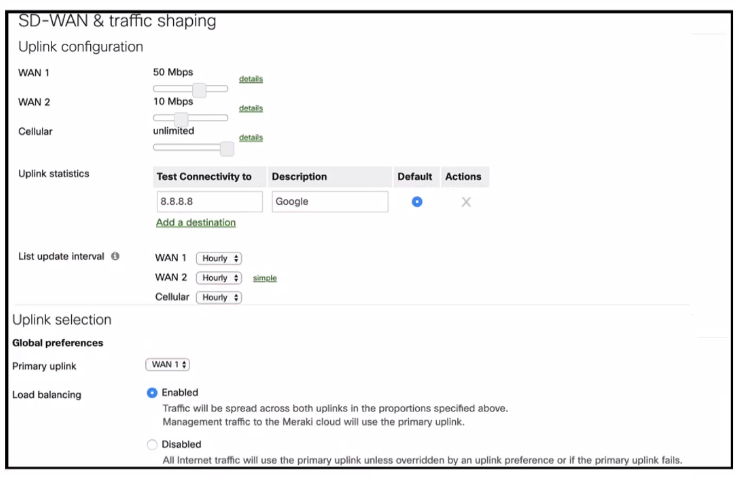
Refer to the exhibit. What Is the ratio of internet-bound flows that route via WAN 1 compared with WAN 2?

